Capture identifying features, condition, provenance and exact album or storage location.
 J.A.R.V.I.S.Justified Analysis & Research for Value, Insights & Stewardship
J.A.R.V.I.S. for stamp, militaria and specialist collectors
The album says “duplicates.” One stamp says: look closer.
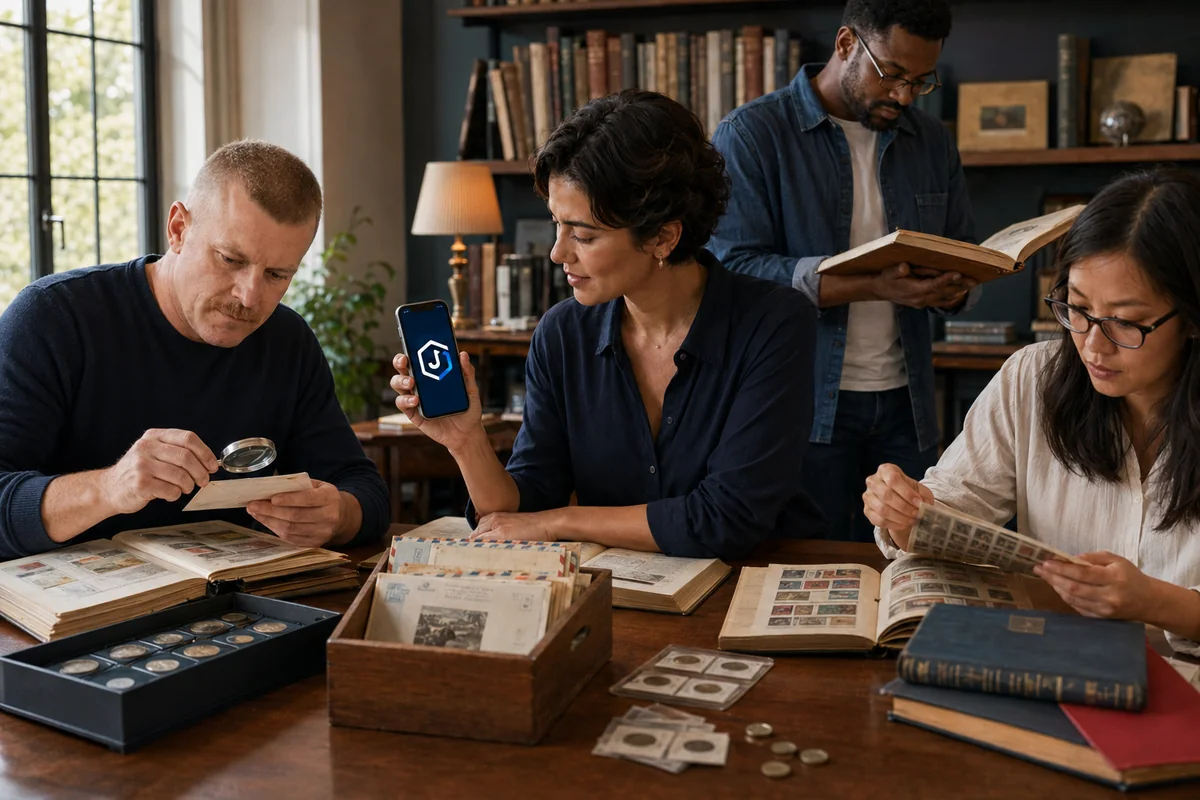
A collector opens a box inherited decades ago. Most pages are familiar, one certificate is loose and a single overprint does not match its neighbours. J.A.R.V.I.S. preserves the page before anything moves, prompts for front, reverse, perforations and watermark clues, records the album and row, links the certificate and explains what remains uncertain. The result is not a dramatic declaration of rarity. It is something more useful: the right evidence, the exact location and a defensible next step—compare, protect or ask a specialist.
One simple conversation
From “What is this?” to “What should I do next?”
For collectors, the conversation preserves the item, album position, visible clues, approved reference evidence and the exact question that still needs an answer.
Compare issue, variety and competing identifications using approved reference evidence.
Review confidence, market evidence and the specialist check most likely to resolve uncertainty.
Preserve the conclusion, source trail and next collection action.
The collector workflow
Turn curiosity into a record that remembers.
J.A.R.V.I.S. keeps the object, evidence, location, questions and next actions connected. Specialist findings remain provisional until the evidence—or a qualified expert—supports them.
Capture one stamp
Photograph the front and reverse while preserving the original image as evidence.
Capture pages and lots
Add album pages, stock cards, glassines or incoming groups without repeating the same setup.
Read visible details
Surface inscriptions, denominations, dates, countries, issuers and visible postmarks for review.
Suggest identification
Propose likely issue or series with confidence and competing possibilities, using only references approved for J.A.R.V.I.S. use.
Record physical attributes
Keep colour, perforation, centring, margins, paper, gum, watermark observations and format together.
Assess condition
Document faults, thins, tears, creases, stains, fading, short perforations, hinges and gum condition.
Examine cancellations
Describe visible cancel type, date and location clues and preserve postal-history context.
Flag varieties and risks
Surface possible shades, plate varieties, errors, overprints, repairs or forgery concerns for closer review.
Show the evidence
Separate what is visible from what is inferred and explain what additional image or test would help.
Use approved reference evidence
Connect authority-documented catalogues, licensed references, certificates and user-provided research to the item.
Preserve provenance
Record source, seller, acquisition date, purchase price, certificates and collection history.
Organize the collection
Group by country, era, topic, issue, publicly available catalogue sequence, project or any collector-defined objective.
Record exact location
Track album, page, row, stockbook, box, cabinet and QR-linked storage container.
Manage duplicates and gaps
Identify possible duplicates, build want lists and see what may complete a set or study.
Review market evidence
Compare relevant sold results and record a transparent value range with date, basis and confidence.
Choose the next action
Keep, research, remount, conserve, certificate, insure, exhibit, trade, sell, donate or seek expert review.
Prepare reports
Create collection, insurance, estate, exhibition, loan and valuation-history reports.
Prepare sales
Build human-reviewed titles, descriptions, condition notes, image sets, lots and channel-ready exports.
Maintain continuity
Sync approved records across devices and restore the collection record after replacement or reinstall.
Use voice and hands-free capture
Record notes, locations and commands while handling albums and tools carefully.
Use video and compatible AI glasses
Coming soonMove through albums, boxes or display areas hands-free while J.A.R.V.I.S. preserves observations, suggests useful close-ups and quietly prompts the next evidence check.
Collect with a better memory.
J.A.R.V.I.S. does not replace publicly available catalogues, certificates or specialist judgment. It keeps the evidence and work connected so the collector can make a clearer decision.